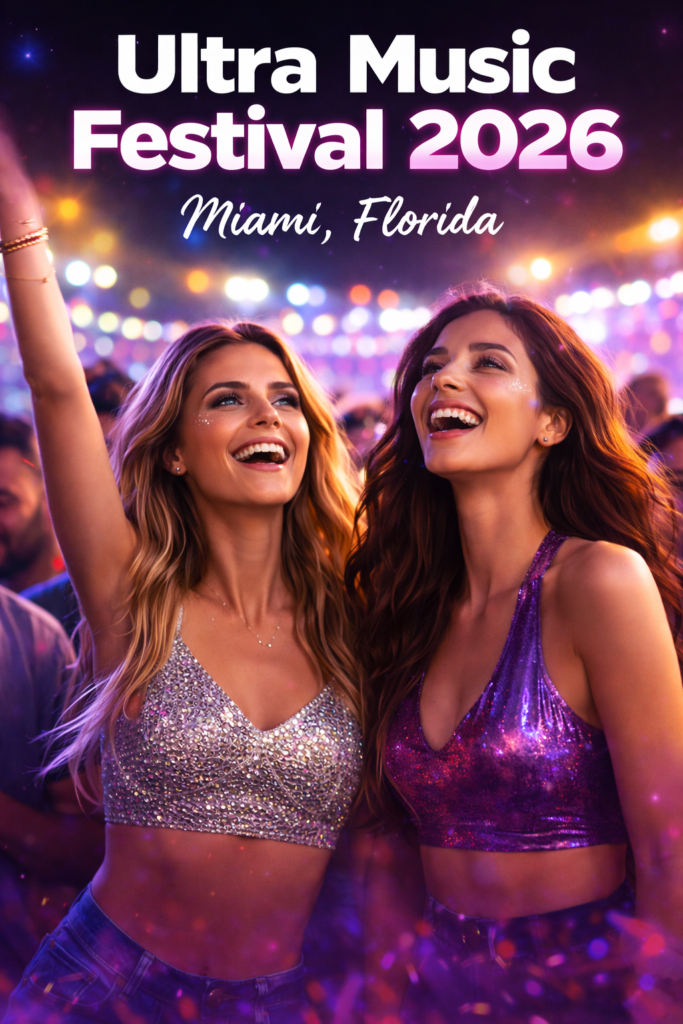
The Ultra Music Festival returns to Bayfront Park in Miami, Florida, from March 27 to March 29, 2026.
Each year, Ultra gathers thousands of attendees from around the world for three days of electronic music, large-scale stage production, and immersive urban celebration. While widely recognized for its lineup and visual spectacle, the deeper significance of Ultra extends beyond entertainment.
Events of this scale alter the way people communicate, connect, and express identity. Ultra Music Festival 2026 offers more than performances – it creates a temporary social environment where human behavior transforms in visible and measurable ways.
Event Overview of Ultra Music Festival 2026
Dates: March 27–29, 2026
Location: Bayfront Park, Downtown Miami, Florida
Duration: Three days
Age Requirement: 18+
Ultra traditionally coincides with Miami Music Week, amplifying the city’s role as a global center for electronic music culture. Multiple stages feature internationally recognized DJs, producers, and emerging artists across genres such as techno, house, trance, and mainstream EDM.
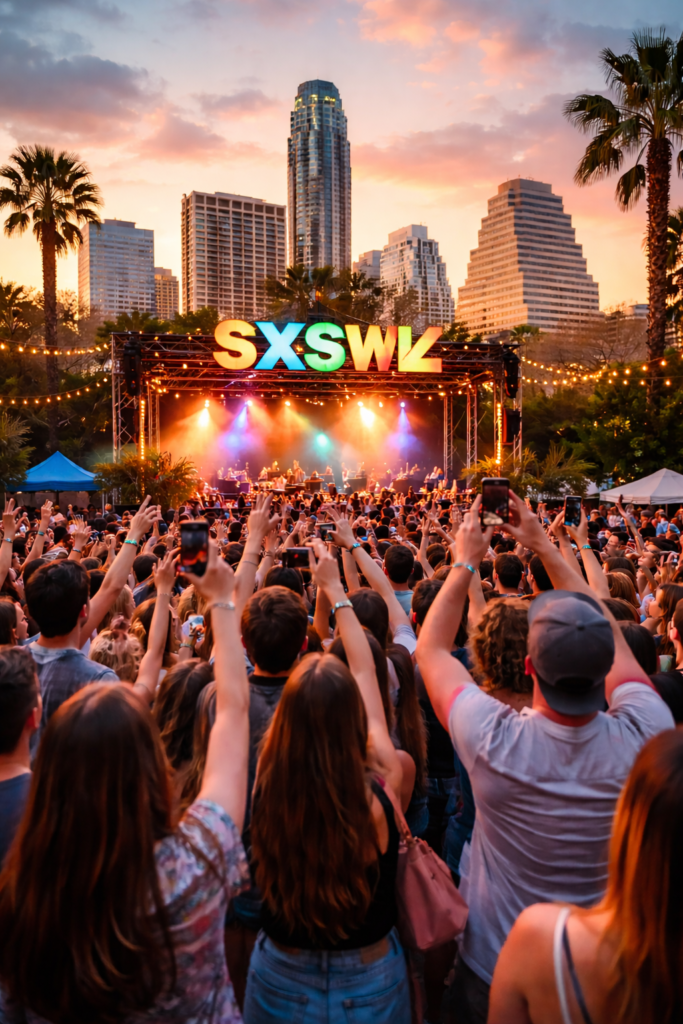
However, the structural design of Ultra – open-air stages, synchronized lighting, crowd density, and rhythmic consistency – also creates a unique communication environment.
The Psychology of Crowd Synchronization
At Ultra, thousands of individuals move in rhythm simultaneously.
Neuroscientific research shows that synchronized movement increases social bonding and collective identity. When participants dance, clap, or chant in unison, their sense of separateness decreases. The crowd becomes psychologically cohesive.
In large festivals such as Ultra, communication shifts from verbal exchange to rhythmic coordination. Music becomes a shared language that requires no translation.
The collective experience produces:
- Heightened emotional intensity
- Reduced social inhibition
- Increased perception of unity
- Temporary suspension of hierarchical differences
In such environments, communication becomes embodied rather than spoken.
Nonverbal Communication Dominates
Unlike conferences or professional gatherings, Ultra operates primarily through nonverbal expression.
Attendees communicate through:
- Fashion and stylistic choices
- Body movement and dance patterns
- Gesture, posture, and spatial positioning
- Eye contact and shared reactions
Clothing at Ultra is not merely aesthetic; it functions as identity signaling. Neon palettes, experimental designs, and genre-specific styling communicate affiliation and self-definition.
In high-volume sound environments, verbal language is secondary. Meaning is transmitted through physical presence and shared sensory experience.
Temporary Communities and Social Reconfiguration
Ultra constructs what sociologists describe as a “temporary community.”
Participants often experience:
- Accelerated social bonding
- Increased openness toward strangers
- Rapid formation of short-term social groups
Outside the festival, individuals operate within defined roles — professional titles, social expectations, cultural constraints. Within Ultra, those roles become less visible. Identity becomes fluid and self-curated.
This temporary restructuring alters communication patterns. People who may be reserved in conventional environments often exhibit expressive behavior in festival contexts.
The shift is not random; it is environmental. Sound intensity, lighting, crowd density, and shared anticipation reduce psychological barriers.
Emotional Contagion at Scale
Large-scale music festivals generate what psychologists call emotional contagion — the rapid spread of emotion through a group.
When a drop in music occurs and thousands respond simultaneously, the emotional surge becomes amplified. Individual reaction merges with collective response.
At Ultra 2026, this dynamic will repeat across multiple stages, creating waves of synchronized emotional release. Such shared experiences strengthen memory formation and reinforce a sense of belonging.
The event becomes less about individual performance and more about collective participation.
Urban Identity and Cultural Significance
Miami’s association with Ultra is not incidental.
Hosting the festival at Bayfront Park situates it within a visible urban skyline, reinforcing Miami’s global cultural branding. The city becomes part of the communication narrative.
Ultra contributes to:
- International cultural exchange
- Tourism-driven social interaction
- Cross-cultural communication through music
The event reflects how modern festivals function as global communication platforms rather than isolated entertainment gatherings.
Why Ultra Music Festival 2026 Matters Beyond Entertainment
Ultra 2026 is significant not solely because of its lineup or production scale, but because it demonstrates how environments shape communication.
It illustrates:
- How rhythm replaces speech
- How identity becomes performative
- How strangers experience temporary solidarity
- How shared emotion redefines social distance
For three days in March 2026, Bayfront Park will transform into a concentrated social experiment in collective human behavior.
Understanding Ultra through this lens aligns it with a broader exploration of communication within meaningful moments – precisely the type of inquiry central to Message Valley.
The festival is an event.
The deeper subject is human interaction under intensified conditions.
Ultra Music Festival 2026 FAQs
Ultra Music Festival 2026 will take place from March 27 to March 29, 2026, at Bayfront Park in Downtown Miami, Florida.
The festival is held at Bayfront Park in Miami, Florida, a waterfront venue in the city’s downtown area.
Ultra primarily features electronic dance music (EDM), including techno, house, trance, and mainstream electronic genres.
Yes, Ultra Music Festival is restricted to attendees aged 18 and above.
Large-scale festivals create synchronized crowd movement, shared rhythm, and emotional contagion, which strengthen group bonding and collective identity.
In high-volume music environments, nonverbal communication dominates. Attendees connect through movement, visual identity, and shared emotional reactions.