
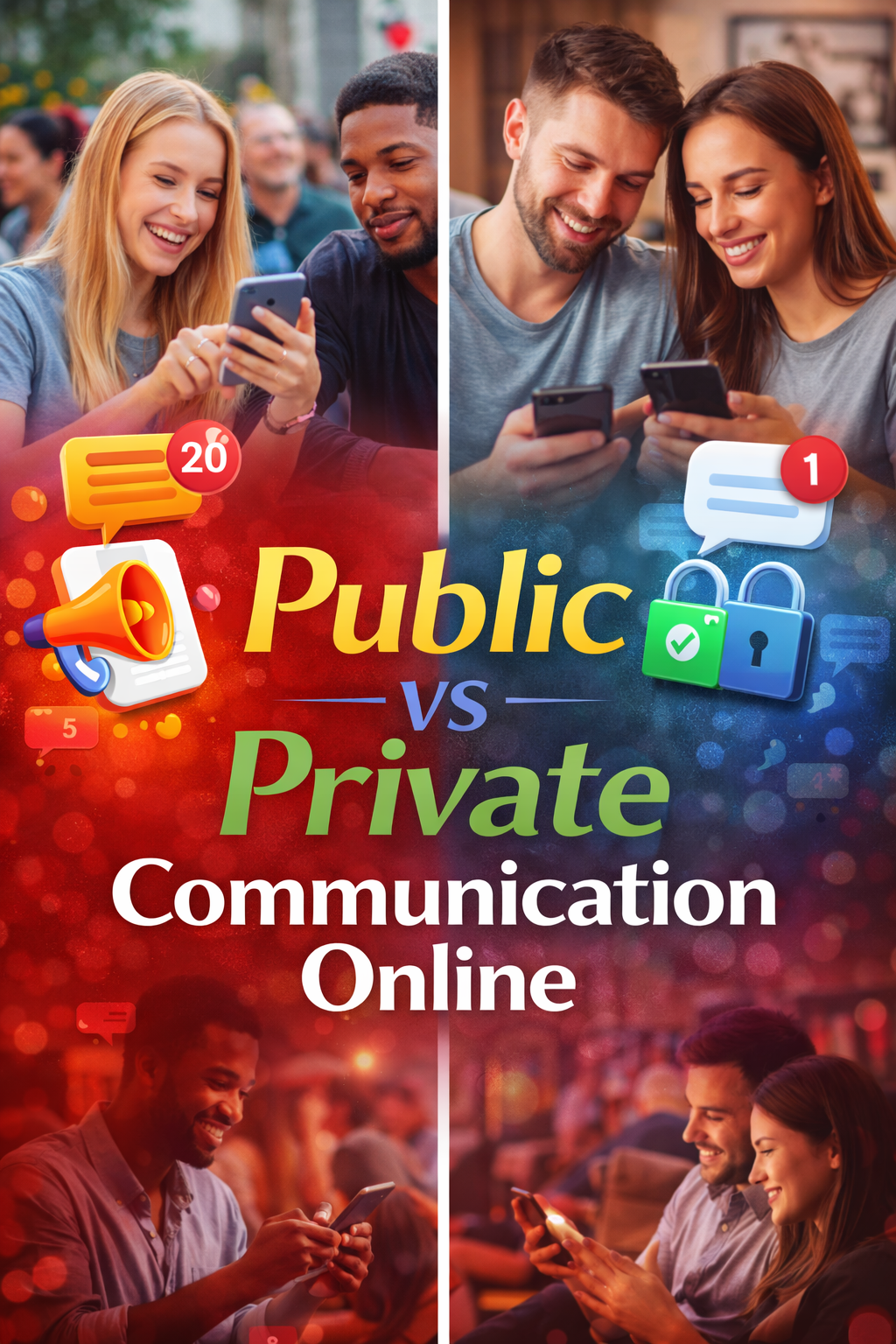
Public vs Private Communication Online – What’s the Difference and What Works Best?
In today’s digital world, communication happens everywhere—on social media, messaging apps, emails, forums, and more. One of the most important distinctions in modern communication is whether it is public or private. While both serve essential roles, they function very differently and can significantly impact how messages are received and interpreted.
Understanding the difference between public and private communication online is crucial for maintaining relationships, protecting privacy, and communicating effectively in both personal and professional spaces.
What is Public Communication Online?
Public communication refers to messages shared in spaces where they are visible to a broad or undefined audience. This includes social media posts, comments, public forums, blogs, and community platforms.
When you post something publicly, it is accessible to multiple people—sometimes even beyond your immediate network. Public communication is often used to share opinions, updates, announcements, or content meant for a wider audience.
However, once something is public, it becomes harder to control how it is interpreted or shared.
What is Private Communication Online?
Private communication happens in restricted or one-on-one spaces. This includes direct messages, emails, private chats, and closed groups.
Private communication allows for more personal, secure, and controlled interactions. It is typically used for sensitive conversations, personal matters, or discussions that require confidentiality.
Unlike public communication, private messages are intended for specific individuals and are not meant for a wider audience.
Key Differences Between Public and Private Communication
Understanding how these two forms differ can help you choose the right approach for different situations.
| Aspect | Public Communication | Private Communication |
|---|---|---|
| Audience | Large or undefined | Specific individuals |
| Visibility | Open and accessible | Restricted and controlled |
| Privacy | Low | High |
| Purpose | Sharing, broadcasting | Personal interaction |
| Risk | Misinterpretation, exposure | Limited but still possible |
| Control | Less control once posted | More control over conversation |
These differences highlight how public communication focuses on reach, while private communication emphasizes control and intimacy.
Control and Privacy
One of the biggest distinctions between public and private communication is control. Public posts can be shared, commented on, or even taken out of context by others. Once something is posted publicly, it is difficult to take it back completely.
Private communication offers more control. You can choose who sees your message and limit its reach. However, it is still important to be cautious, as private messages can sometimes be shared or leaked.
Tone and Interpretation
Tone plays a crucial role in how messages are understood. In public communication, messages are often interpreted by a diverse audience with different perspectives, which increases the chances of misunderstanding.
Private communication allows for more clarity. Since the message is directed at a specific person, it can be tailored to their understanding, reducing the risk of misinterpretation.
Emotional Impact and Sensitivity
Public communication is not always suitable for emotional or sensitive topics. Addressing personal issues publicly can lead to discomfort, misunderstanding, or even conflict.
Private communication is better suited for emotional conversations, apologies, or resolving conflicts. It provides a safer space for honest and meaningful dialogue.
When to Use Public Communication
Public communication is effective when your goal is to reach a larger audience or share information widely.
It is ideal for:
- Announcements and updates
- Sharing opinions or content
- Promoting ideas or messages
- Engaging with a community
Public platforms are powerful for visibility, but they require careful consideration of tone and content.
When to Use Private Communication
Private communication is more appropriate when the conversation is personal, sensitive, or specific to an individual.
It is ideal for:
- Personal discussions
- Conflict resolution
- Apologies or emotional conversations
- Confidential information
Using private communication in these situations helps maintain respect and trust.
Risks of Misusing Public and Private Communication
Using the wrong type of communication can lead to problems. Sharing personal issues publicly may damage relationships, while keeping important discussions too private may limit transparency when needed.
Public communication can sometimes escalate conflicts, especially when emotions are involved. Private communication, if misused, can lead to misunderstandings if not clear or honest.
Choosing the right platform and approach is essential.
The Role of Social Media in Communication
Social media has blurred the line between public and private communication. Features like comments, stories, and direct messages create multiple layers of interaction.
People often switch between public and private communication without fully considering the impact. Being mindful of where and how you communicate can help avoid unintended consequences.
Choosing the Right Approach
The key to effective communication lies in understanding the purpose and context of your message.
Ask yourself:
- Who is this message for?
- Is it personal or general?
- Does it require privacy or visibility?
Answering these questions can help you decide whether to communicate publicly or privately.
Balancing Visibility and Privacy
Both public and private communication have their place in modern digital life. Public communication helps you connect with a wider audience, while private communication helps you build deeper, more personal connections.
Balancing the two ensures that your communication remains effective, respectful, and appropriate for each situation.
Communicating with Awareness
In a world where everything can be shared instantly, being mindful of how you communicate is more important than ever. The choice between public and private communication can shape how your message is received and how it impacts others.
If you want to explore more about how communication works in different contexts, you can also check Digital Communication vs Face-to-Face Communication or Short vs Long Messages to better understand how medium and format influence communication.
Making Communication Intentional
Ultimately, communication is about intention. Whether you choose to share something publicly or privately, the goal should always be clarity, respect, and understanding.
By being thoughtful about where and how you communicate, you can avoid misunderstandings, protect relationships, and ensure that your message truly reaches the right audience in the right way.
Related FAQs
Public communication is shared openly with a broad audience, such as social media posts or comments, while private communication is limited to specific individuals through messages, emails, or direct chats.
Public communication is best for sharing announcements, opinions, content, or updates that are meant for a wider audience or community engagement.
Private communication allows for more secure, personal, and meaningful conversations, especially when discussing sensitive topics, resolving conflicts, or sharing confidential information.
Public communication can lead to misinterpretation, loss of privacy, unwanted attention, and the possibility of content being shared beyond your control.
You should consider the purpose, audience, and sensitivity of your message. Use public communication for general sharing and private communication for personal or important discussions.