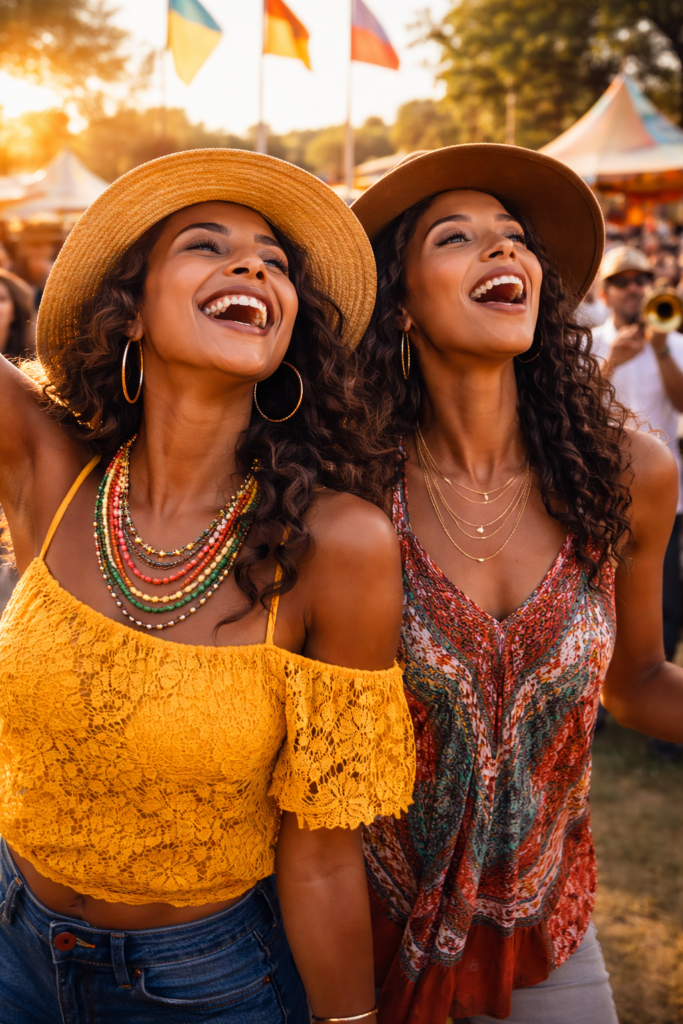
The New Orleans Jazz & Heritage Festival returns in 2026 from April 24 to May 3, 2026, at the historic Fair Grounds Race Course in New Orleans, Louisiana.
Widely known as “Jazz Fest,” the event is more than a music festival. It is a cultural archive expressed through sound, food, storytelling, and intergenerational participation. While audiences attend for performances, the deeper significance lies in how the festival preserves identity and reshapes communication across generations.
Event Overview of Jazz Fest 2026
Dates: April 24 – May 3, 2026
Location: Fair Grounds Race Course, New Orleans, Louisiana
Duration: Two extended weekends
Focus: Jazz, blues, gospel, R&B, Cajun, Zydeco, and contemporary genres
Since its founding in 1970, Jazz Fest has operated as a platform to celebrate Louisiana’s musical heritage while welcoming global artists. The event draws hundreds of thousands of attendees annually, blending local tradition with international influence.
Yet its real influence extends beyond attendance numbers. Jazz Fest functions as a living example of how culture communicates itself.
Music as Intergenerational Communication
Unlike festivals driven primarily by trend cycles, Jazz Fest emphasizes continuity.
Grandparents, parents, and children often attend together. Performances range from traditional brass bands to contemporary artists, creating a layered cultural dialogue.
Music at Jazz Fest becomes:
- A transmission of historical memory
- A bridge between generational perspectives
- A reinforcement of regional identity
When older audiences respond emotionally to traditional jazz or gospel performances, younger attendees witness not only sound but context. They observe how meaning is attached to rhythm, lyric, and performance style.
In this way, the festival acts as an informal educational system – transmitting culture without formal instruction.
Emotional Resonance and Cultural Memory
Jazz music carries improvisation at its core. Improvisation itself is a form of spontaneous communication.
At Jazz Fest, performers adapt to crowd energy, tempo shifts, and shared atmosphere. Audiences respond in real time — through applause, movement, vocal affirmation, and collective stillness.
This feedback loop forms a communicative cycle:
- Artist expresses
- Audience reacts
- Artist adjusts
- Collective experience deepens
Over time, repeated exposure to these patterns strengthens emotional memory. Attendees often describe Jazz Fest not simply as entertainment but as a return – a ritual reconnection with cultural roots.
Food, Language, and Identity Signaling
Communication at Jazz Fest is not limited to music.
Louisiana cuisine – from crawfish to jambalaya – becomes part of identity expression. Culinary tradition operates as nonverbal storytelling. Food signals belonging, heritage, and regional pride.
Similarly, language patterns heard throughout the festival – local dialects, storytelling traditions, gospel calls, and brass band announcements – reinforce cultural specificity.
The environment encourages pride without exclusion. Visitors participate respectfully, while local voices remain central.
This balance is critical. It allows cultural exchange without erasing origin.
Collective Rhythm and Social Synchronization
Large music festivals often create emotional intensity. Jazz Fest differs in tempo and tone from high-energy EDM environments.
Instead of constant stimulation, Jazz Fest alternates between:
- Reflective listening
- Spiritual resonance (particularly during gospel performances)
- High-energy brass celebration
These shifts create varied emotional states within the same space. Crowd synchronization occurs not only through dance but also through shared stillness.
Moments of silence during powerful vocal performances often generate as much unity as moments of collective movement.
Urban Context and Historical Weight
New Orleans is not merely a backdrop; it is foundational to the festival’s meaning.
As the birthplace of jazz, the city represents resilience, cultural blending, and historical complexity. Jazz Fest reinforces the narrative that culture survives through adaptation rather than preservation alone.
The festival also contributes economically and socially to the city, reinforcing its global cultural influence.
In this sense, Jazz Fest becomes both celebration and preservation – a public declaration that cultural identity remains active.
Why Jazz Fest 2026 Matters Beyond Entertainment
The 2026 edition of Jazz Fest offers more than scheduled performances between April 24 and May 3.
It represents:
- Intergenerational dialogue
- Cultural continuity through sound
- Emotional bonding through shared rhythm
- Identity affirmation in public space
For ten days, the Fair Grounds transforms into a site where music communicates history, belonging, and resilience.
Understanding Jazz Fest through this lens aligns with the broader inquiry central to Message Valley: how meaningful moments reshape human communication.
Jazz Fest is not simply an event.
It is a conversation between past and present – performed in rhythm.
New Orleans Jazz & Heritage Festival 2026 FAQs
The festival will take place from April 24 to May 3, 2026, over two extended weekends.
Jazz Fest is held at the Fair Grounds Race Course in New Orleans, Louisiana.
The festival showcases jazz, blues, gospel, R&B, Cajun, Zydeco, and other regional and contemporary genres.
Jazz Fest preserves Louisiana’s musical heritage and creates intergenerational communication through live performance and cultural celebration.