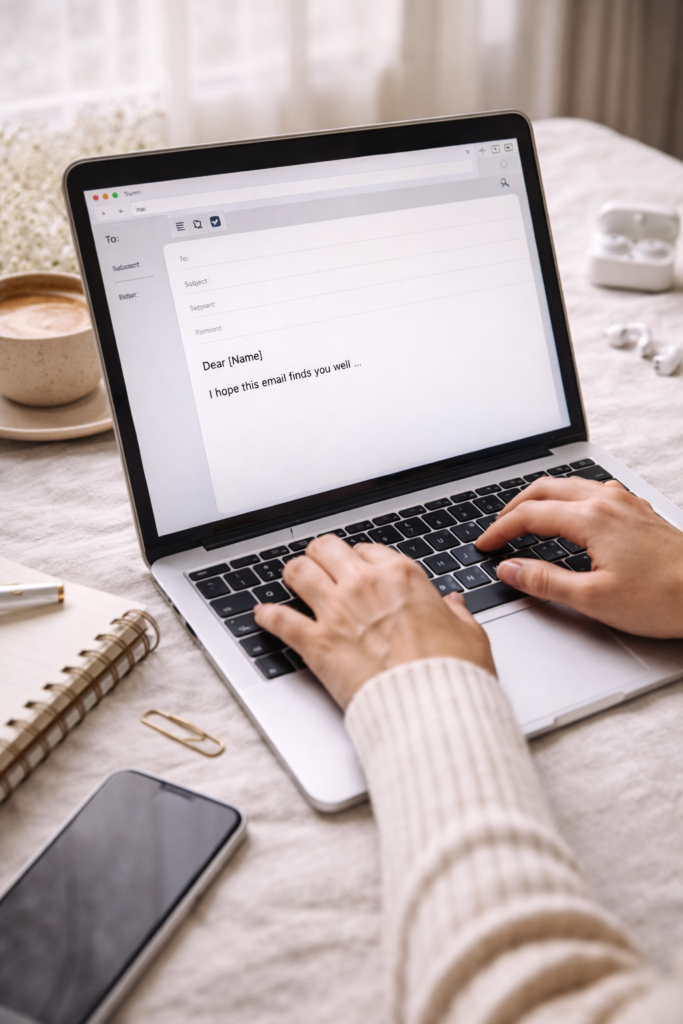
AI has made it easier than ever to write emails that sound professional. With a few prompts, messages can be refined, expanded, softened, and structured into something that appears clear and courteous. The grammar is perfect, the tone is balanced, and the wording feels carefully considered.
Yet in many real-world situations, these over-polished emails create an unexpected problem. They sound correct, but they don’t feel natural. The more refined the message becomes, the less it reflects the moment, the relationship, or the intent behind it.
Over-polished AI emails don’t fail because they are poorly written. They fail because they remove the small imperfections that signal human communication.
When Smoothness Replaces Clarity
In everyday communication, clarity often comes from directness. A quick update, a short confirmation, or a brief request reflects how people actually coordinate work. These messages are efficient because they match the pace of real interactions.
Over-polished emails tend to expand simple ideas into fully structured responses. A short message like “Can we move this to tomorrow?” becomes a multi-sentence paragraph with context, appreciation, and a courteous close. While this sounds professional, it can dilute the main point.
When every email follows a polished format, communication slows down. The reader has to filter through polite framing before reaching the purpose. Over time, this creates friction instead of clarity.
The Loss of Natural Tone
Human emails vary in tone depending on familiarity and urgency. Colleagues who work closely together often communicate in shorter, more conversational language. Long-standing relationships rely on shared understanding, not perfect structure.
AI polishing tends to standardise tone. Informal phrasing is replaced with neutral, balanced language. This removes signals that normally reflect closeness, urgency, or confidence.
An overly refined message may sound appropriate, but it no longer reflects how the sender naturally communicates. The reader senses this shift, even if they cannot explain why. The message feels slightly distant.
Politeness Without Context
Politeness plays an important role in communication, but it works best when applied intentionally. Humans adjust politeness depending on the situation. A quick internal update may be direct, while a sensitive conversation may be more carefully phrased.
Over-polished AI emails often apply politeness uniformly. Every message begins with a courteous opener, includes appreciation, and ends with a supportive close. This consistency removes the situational judgment that normally shapes tone.
When politeness appears in every message, it stops signalling meaning. Instead of feeling thoughtful, it becomes routine.
The Disappearance of Timing Signals
Emails written under real conditions carry subtle timing cues. A rushed message is shorter. A thoughtful one unfolds more slowly. A confident response may be direct, while uncertainty may appear as careful wording.
Over-polished AI emails flatten these variations. Sentences are balanced, transitions are smooth, and the pacing feels uniform. The message no longer reflects urgency, hesitation, or decisiveness.
Without these signals, the communication feels detached from the moment in which it was written.
When Perfection Feels Artificial
Perfectly structured emails can sometimes create distance. In ongoing conversations, people expect continuity in tone. When one message suddenly becomes highly refined, it stands out. The shift suggests the message was constructed rather than written.
This doesn’t necessarily reduce professionalism, but it can affect authenticity. Communication works best when it feels consistent with the relationship. Over-polishing disrupts that consistency.
The issue is not the quality of language, but the mismatch between tone and context.
Over-Polishing and Decision-Making
Emails are often used to move work forward. Decisions, confirmations, and updates depend on clear intent. Over-polished messages sometimes prioritise completeness over decisiveness.
Instead of stating a position directly, the message may include multiple qualifiers, acknowledgements, and balanced phrasing. This can make the intent less obvious. The reader spends more time interpreting rather than acting.
In environments where speed matters, this subtle delay accumulates.
Personality Gets Smoothed Out
Every person has a distinct communication style. Some are concise, others detailed. Some use warmth, others rely on brevity. These differences help people recognise voice and build familiarity.
AI polishing reduces these differences. Language moves toward a neutral average designed to sound broadly acceptable. Over time, this makes messages from different individuals feel similar.
When personality disappears, communication becomes harder to attribute to a specific voice. The message feels correct, but not distinctive.
The Expectation of Effort
Readers often associate tone with effort. A short, direct message in an ongoing conversation can signal efficiency. A longer, carefully structured message may signal importance.
Over-polished AI emails blur this distinction. Even routine updates may appear carefully constructed. This makes it harder to judge priority based on tone.
When every message sounds equally refined, the natural hierarchy of communication is lost.
Where AI Still Helps
AI remains valuable for drafting, especially when ideas are unclear or when structure is needed. It can improve readability, remove ambiguity, and help shape complex communication.
The issue arises when polishing continues beyond usefulness. Once the message becomes detached from the sender’s natural voice, the benefits begin to decline.
A lightly edited draft often works better than a fully refined one.
What Makes Emails Feel Natural
Natural emails reflect awareness of:
- the relationship between sender and reader
- the urgency of the situation
- the purpose of the message
- the existing conversation
These factors influence tone more than grammar or structure. Humans adjust instinctively, allowing messages to match the moment.
Over-polished AI emails prioritise correctness. Human communication prioritises alignment.
The Balance Between Clarity and Authenticity
Professional communication does not require perfection. In many cases, small imperfections signal that the message was written with real intent. Slight variations in tone, sentence length, or phrasing create authenticity.
The goal is not to avoid AI, but to avoid removing the human layer. A message should sound like it belongs to the person sending it, not just to a standardised template.
When refinement supports meaning, it improves communication. When refinement replaces voice, it creates distance.
Over-polished AI emails highlight this distinction. They show that effective communication depends not only on how well words are arranged, but on how closely they reflect the moment in which they are used.
Related FAQs
Over-polished emails remove natural tone variations, making communication sound overly formal and less reflective of real human interaction.
Sometimes yes. Perfectly structured messages can feel scripted, especially when they lack personality or situational nuance.
AI can help with drafting, but human adjustments improve tone, context, and relationship alignment.
Natural emails reflect timing, familiarity, and conversational tone rather than overly formal or perfectly balanced structure.
Avoid over-polishing during quick updates, internal communication, or ongoing conversations where authenticity matters more than formality.