
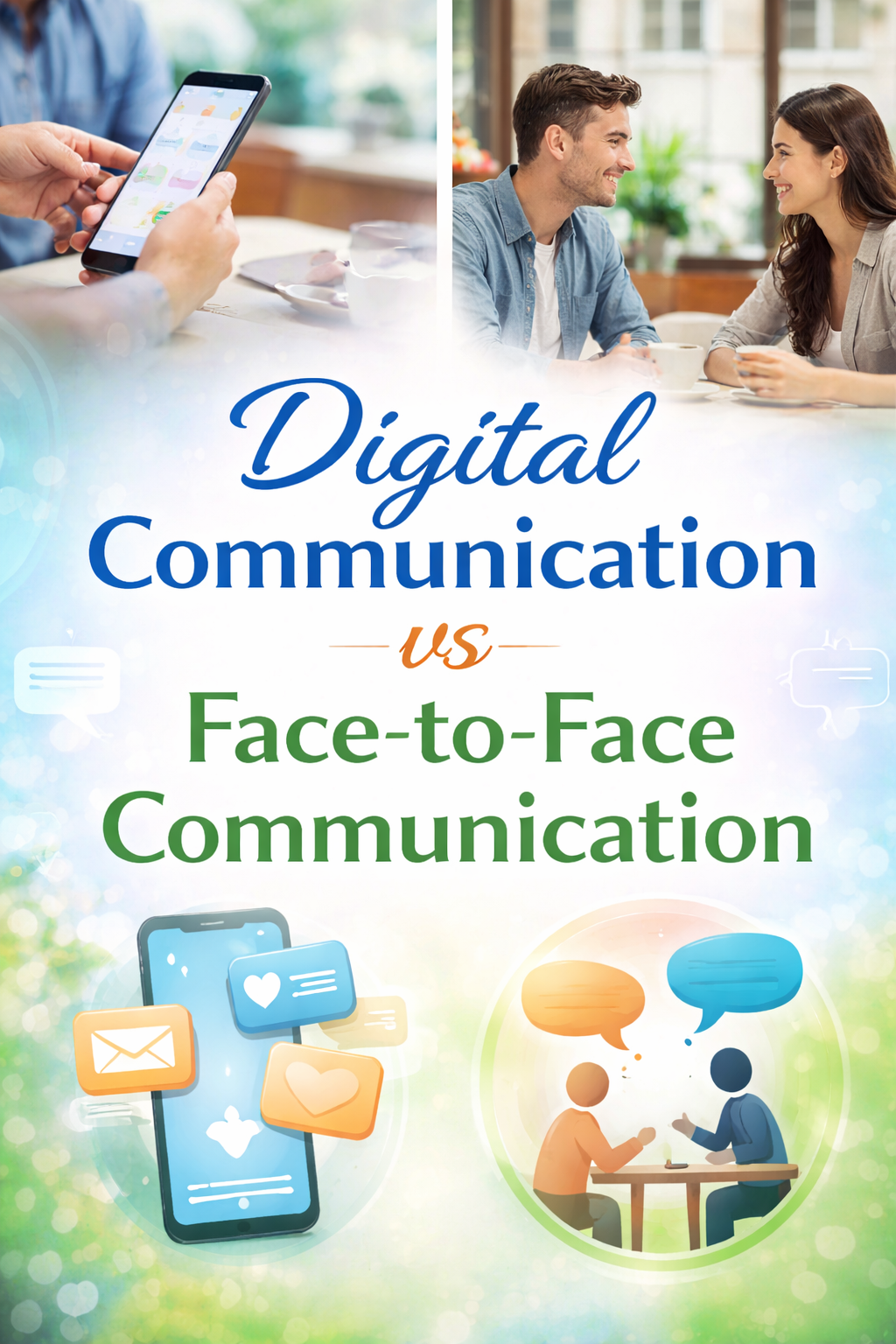
Digital Communication vs Face-to-Face Communication – Understanding the Real Differences
Communication has evolved rapidly over the past few decades. What once depended almost entirely on in-person conversations has now expanded into a wide range of digital interactions—texts, emails, video calls, and social media messages. While both digital and face-to-face communication serve the same purpose—sharing ideas, emotions, and information—they function very differently in practice.
Understanding the difference between digital communication and face-to-face communication is essential in today’s world. Each has its own strengths, limitations, and ideal use cases. Knowing when and how to use each can improve relationships, reduce misunderstandings, and make communication more effective.
What is Digital Communication?
Digital communication refers to any form of interaction that takes place through electronic devices or platforms. This includes text messages, emails, social media, video calls, and messaging apps.
It allows people to connect instantly regardless of distance, making it one of the most widely used forms of communication today. Digital communication is fast, convenient, and accessible, which is why it has become a central part of daily life.
However, it often lacks the emotional depth and non-verbal cues that are naturally present in in-person conversations.
What is Face-to-Face Communication?
Face-to-face communication involves direct, in-person interaction between individuals. It includes verbal communication along with non-verbal elements such as body language, facial expressions, tone of voice, and eye contact.
This form of communication is considered the most natural and effective way to convey emotions, build trust, and create strong connections. It allows for immediate feedback and deeper understanding.
Unlike digital communication, face-to-face interaction is more immersive and emotionally rich.
Key Differences Between Digital and Face-to-Face Communication
While both forms aim to convey messages, they differ significantly in how information is delivered and interpreted.
| Aspect | Digital Communication | Face-to-Face Communication |
|---|---|---|
| Medium | Devices, apps, internet | In-person interaction |
| Speed | Instant or delayed | Immediate |
| Emotional Expression | Limited (text-based or screen-based) | High (tone, gestures, expressions) |
| Clarity | Can be misunderstood | More clear due to non-verbal cues |
| Accessibility | Can connect across distances | Requires physical presence |
| Permanence | Messages can be saved | Conversations are temporary |
| Effort | Convenient and quick | Requires time and presence |
This comparison highlights how digital communication prioritizes convenience, while face-to-face communication emphasizes depth and clarity.
Emotional Connection and Understanding
One of the biggest differences lies in emotional connection. Face-to-face communication allows people to fully express emotions through tone, expressions, and body language. This makes it easier to understand intent and avoid misunderstandings.
Digital communication, on the other hand, often relies heavily on words alone. Without tone or visual cues, messages can be interpreted differently than intended. This is why people sometimes misread texts or emails.
For example, a short message might come across as rude or cold, even if that wasn’t the intention.
Speed vs Depth
Digital communication is designed for speed. You can send a message instantly and receive a response within seconds, regardless of location. This makes it ideal for quick updates, casual conversations, and urgent communication.
Face-to-face communication, however, prioritizes depth over speed. It takes more effort and time but allows for more meaningful conversations. Complex topics, emotional discussions, and important decisions are often better handled in person.
Convenience vs Presence
Digital communication offers unmatched convenience. You can communicate anytime, anywhere, without needing to be physically present. This is especially useful in a global and fast-paced world.
Face-to-face communication requires presence, which can sometimes be a limitation. However, this same requirement makes it more intentional and meaningful. Being physically present shows attention, respect, and commitment.
Miscommunication and Clarity
Miscommunication is more common in digital communication due to the absence of non-verbal cues. Tone, sarcasm, and emotions can easily be misunderstood.
Face-to-face communication reduces this risk significantly. Immediate feedback allows for clarification, and non-verbal signals help reinforce meaning.
This is why important conversations—such as apologies, serious discussions, or conflict resolution—are often more effective in person.
When to Use Digital Communication
Digital communication works best in situations where speed, convenience, and accessibility are priorities.
It is ideal for:
- Quick updates and reminders
- Casual conversations
- Work-related communication across locations
- Sharing information or documents
It is also commonly used when people prefer not to have direct conversations, such as sending messages during busy schedules or late hours.
When to Use Face-to-Face Communication
Face-to-face communication is more suitable for situations that require emotional depth, clarity, and trust.
It is ideal for:
- Important discussions
- Conflict resolution
- Expressing emotions
- Building relationships
- Making significant decisions
In these cases, being present can make a significant difference in how the message is received.
The Role of Technology in Modern Communication
Technology has made communication faster and more accessible, but it has also changed how people interact. While digital tools make it easier to stay connected, they can sometimes reduce the quality of interactions.
Many people now rely heavily on messaging instead of direct conversations, which can affect emotional connection and understanding. Balancing digital and face-to-face communication is essential for maintaining meaningful relationships.
Finding the Right Balance
Neither digital communication nor face-to-face communication is better on its own. Each serves a different purpose, and the key is knowing when to use each.
For everyday communication, digital tools are efficient and practical. For deeper connections and important conversations, face-to-face interaction remains unmatched.
By understanding the strengths and limitations of both, you can communicate more effectively and build stronger relationships in both personal and professional settings.
Choosing Communication That Truly Connects
In the end, communication is not just about exchanging information—it’s about creating understanding and connection. Digital communication offers speed and convenience, while face-to-face communication provides depth and clarity.
The most effective communicators are those who can adapt, choosing the right method based on the situation, the relationship, and the message they want to convey. By doing so, they ensure that their words not only reach others but also truly resonate.
Related FAQs
The main difference is that digital communication happens through devices and lacks non-verbal cues, while face-to-face communication involves in-person interaction with tone, body language, and immediate feedback.
Neither is better in all situations. Digital communication is convenient and fast, while face-to-face communication is more effective for emotional, complex, and important conversations.
Face-to-face communication is more effective because it includes non-verbal cues like facial expressions, tone, and body language, which improve understanding and reduce misunderstandings.
Digital communication can lead to misinterpretation, lack of emotional connection, delayed responses, and over-reliance on text-based interactions.
Digital communication is best for quick updates, casual conversations, long-distance communication, and situations where immediate physical interaction is not possible.