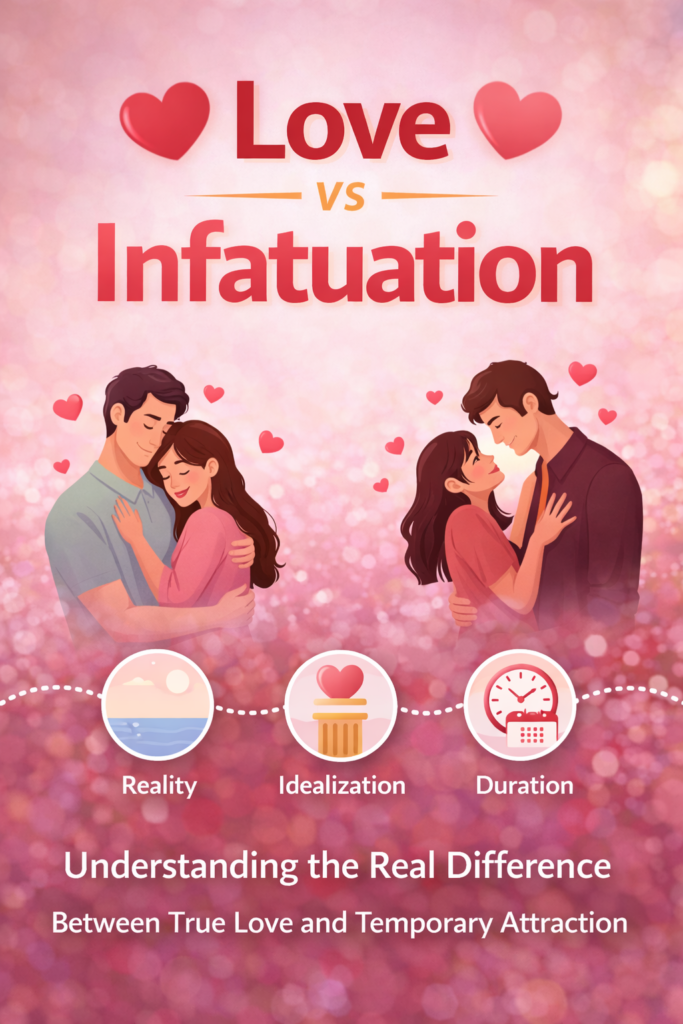
Love and infatuation are often confused, especially in the early stages of a relationship when emotions feel intense, exciting, and overwhelming. Many people believe they are in love when, in reality, they may be experiencing infatuation—a powerful but short-lived emotional state driven by attraction and idealization. Understanding the difference between love and infatuation is essential because it helps you make better decisions in relationships, avoid emotional confusion, and build deeper, more meaningful connections.
While both love and infatuation can feel similar at first, they are fundamentally different in terms of depth, stability, and long-term impact. Recognizing these differences can help you navigate your emotions with clarity and confidence.
What is Love?
Love is a deep, enduring emotional connection that develops over time. It is built on trust, respect, understanding, and acceptance. Unlike fleeting emotions, love grows stronger through shared experiences, challenges, and mutual support.
Love is not just about how someone makes you feel in the moment—it is about how you care for them consistently, even during difficult times. It involves patience, emotional maturity, and a willingness to understand the other person beyond surface-level attraction.
In love, you see the person for who they truly are, including their flaws, and you choose to accept and support them. It is stable, calm, and reassuring rather than overwhelming and unpredictable.
What is Infatuation?
Infatuation is an intense but short-lived emotional experience often based on physical attraction or an idealized perception of someone. It usually happens quickly and creates a sense of excitement, obsession, and urgency.
In infatuation, you may feel like you cannot stop thinking about the person, but your understanding of them is often limited. You tend to focus on their positive traits while ignoring or overlooking their flaws.
Infatuation is driven by emotions rather than reality. It can feel thrilling and addictive, but it lacks the depth and stability required for a long-term relationship.
Key Differences Between Love and Infatuation
One of the most noticeable differences between love and infatuation is time. Love develops gradually, while infatuation happens almost instantly. Infatuation thrives on novelty and excitement, whereas love grows through consistency and shared experiences.
Another important difference is emotional depth. Love involves genuine care, empathy, and understanding. Infatuation, on the other hand, is often centered around how the other person makes you feel rather than who they truly are.
Stability is also a defining factor. Love provides a sense of security and comfort, while infatuation is often unpredictable and emotionally intense. In love, communication is open and honest, whereas infatuation may involve unrealistic expectations and assumptions.
Emotional Experience: Calm vs Intense
Love tends to feel calm, steady, and reassuring. It does not create constant anxiety or emotional highs and lows. Instead, it provides a sense of peace and belonging.
Infatuation, however, is often intense and overwhelming. It can create emotional highs when things feel perfect and lows when expectations are not met. This rollercoaster of emotions is a key sign of infatuation rather than love.
Focus: Reality vs Idealization
In love, you see the person as they truly are. You recognize their strengths and weaknesses and still choose to be with them. This realistic understanding strengthens the relationship.
Infatuation is based on idealization. You may place the person on a pedestal and ignore their flaws. This creates an unrealistic image that can lead to disappointment over time.
Duration: Long-Term vs Short-Term
Love is long-lasting and continues to grow over time. It evolves as both individuals grow and change, adapting to new circumstances.
Infatuation is temporary. It often fades once the initial excitement wears off or when reality begins to set in.
Communication and Trust
Healthy communication and trust are essential components of love. In a loving relationship, both individuals feel comfortable expressing their thoughts and emotions openly.
Infatuation may lack this depth of communication. Conversations can feel surface-level, and there may be hesitation in showing vulnerability.
Decision-Making in Relationships
Love encourages thoughtful and balanced decision-making. It allows you to consider the long-term impact of your choices and prioritize mutual well-being.
Infatuation often leads to impulsive decisions driven by emotions. This can result in unrealistic expectations or rushed commitments.
Signs You Are Experiencing Love
When you are in love, you feel secure and valued. You are willing to invest time and effort into the relationship, and you care about the other person’s happiness as much as your own. You are patient, understanding, and committed to growing together.
Love also allows space for individuality. You respect each other’s independence while maintaining a strong connection.
Signs You Are Experiencing Infatuation
Infatuation is often characterized by constant thoughts about the person, a strong desire for their attention, and an idealized perception of who they are. You may feel anxious about their reactions and overly dependent on their validation.
The relationship may feel intense but lacks depth, and your emotions may fluctuate frequently.
Why People Confuse Love with Infatuation
The early stages of a relationship can feel exciting and intense, making it difficult to distinguish between love and infatuation. Media, movies, and social expectations often portray love as dramatic and overwhelming, which can reinforce this confusion.
In reality, love is quieter and more stable, while infatuation is loud and temporary.
How Infatuation Can Turn Into Love
Infatuation is not always negative—it can be the starting point of a deeper connection. When two people take the time to truly understand each other, build trust, and navigate real-life situations together, infatuation can gradually evolve into love.
This transformation requires patience, honest communication, and emotional maturity. It involves moving beyond surface-level attraction and developing a genuine connection based on reality rather than imagination.
Building Healthy and Meaningful Relationships
Understanding the difference between love and infatuation helps you build stronger, healthier relationships. It allows you to recognize genuine emotional connections and avoid being misled by temporary feelings.
Focusing on trust, respect, communication, and shared values creates a solid foundation for long-term relationships that are fulfilling and meaningful.
Choosing Between Love and Infatuation
While infatuation can feel exciting and intense, it is often short-lived and based on illusion. Love, on the other hand, offers stability, depth, and long-term fulfillment. Choosing love means valuing consistency over intensity and connection over excitement.
By understanding your emotions and taking the time to nurture meaningful relationships, you can move beyond temporary attraction and experience something deeper and more lasting. In the end, it is not the intensity of the feeling that matters most, but the strength and sincerity of the connection you build over time.
Related FAQs
The main difference is that love is deep, long-lasting, and based on trust and understanding, while infatuation is intense but short-lived and often based on attraction and idealization
Love develops over time and feels stable and secure, whereas infatuation happens quickly and feels intense, exciting, and sometimes overwhelming.
Yes, infatuation can turn into love if the relationship grows with time, communication, trust, and a deeper understanding of each other.
Infatuation typically lasts for a short period, from a few weeks to a few months, depending on how the relationship develops and how well both people get to know each other.
People often confuse them because both involve strong emotions in the beginning. However, infatuation is driven by excitement and idealization, while love is built on reality and long-term connection.