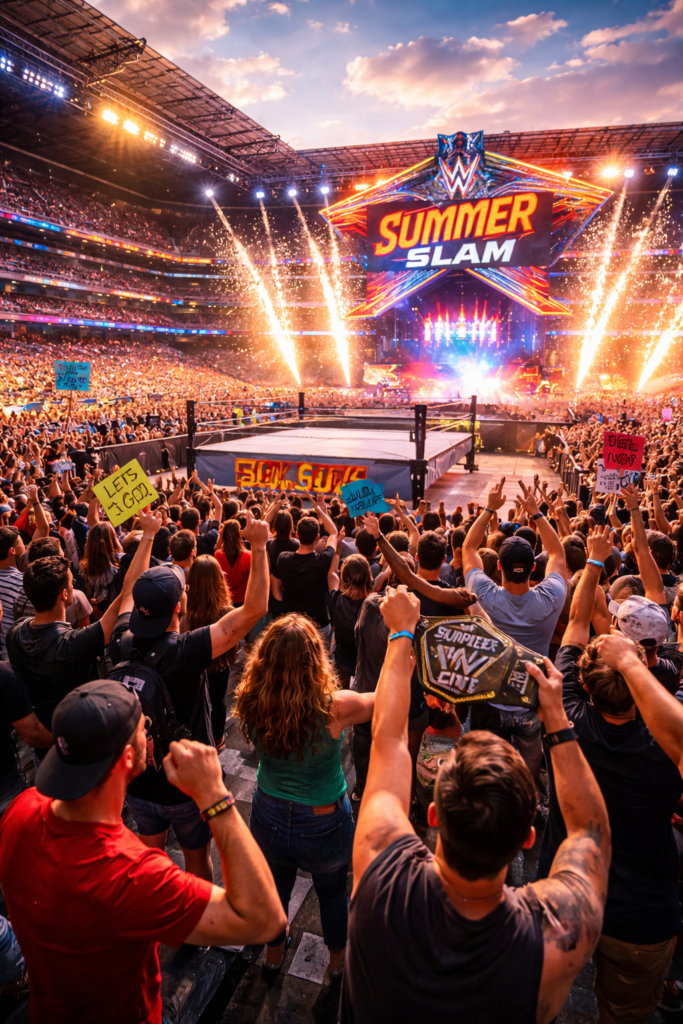
Every summer, professional wrestling transforms into stadium-scale theatre. In 2026, WWE SummerSlam returns as one of the most anticipated events in global sports entertainment – a night where athletic performance, character storytelling, and audience participation merge into one immersive spectacle.
SummerSlam is not just a wrestling event. It is a narrative arena.
The Ring as a Storytelling Stage
At its center stands the squared circle – simple in structure, yet powerful in symbolism. Inside the ring, rivalries unfold. Outside it, commentary, entrances, and crowd reactions shape interpretation.
Unlike traditional sports, WWE matches operate on layered storytelling:
- Heroes and villains evolve over time.
- Long-term rivalries build emotional investment.
- Entrances signal identity before the first move is made.
Every gesture communicates intention. Every reaction amplifies meaning.
Audience as Co-Author
One of SummerSlam’s defining elements is its audience. Thousands fill the stadium, holding signs, chanting slogans, and reacting in real time. The crowd does not passively watch – it participates.
Boos, cheers, and synchronized chants influence atmosphere and pacing. In many ways, the audience becomes a character within the event.
This dynamic transforms SummerSlam into a live feedback loop:
- Performers project narrative.
- Fans respond.
- Energy cycles back into performance.
Meaning is shaped collaboratively.
Spectacle and Symbol
From dramatic entrances with pyrotechnics to championship belts raised under stadium lights, SummerSlam operates through symbols. Titles represent legacy. Costumes represent identity. Music cues signal transformation.
The scale matters.
Held in major stadium venues, SummerSlam turns individual rivalry into communal theatre. Under bright lights and roaring crowds, storylines feel larger than life – yet deeply personal for fans who have followed them for months.
Why WWE SummerSlam 2026 Matters
In a digital era where entertainment is often consumed individually, SummerSlam remains defiantly collective. Thousands gather physically to witness a scripted yet emotionally authentic experience.
It demonstrates:
- How narrative sustains engagement.
- How ritualized competition builds loyalty.
- How shared spectacle creates memory.
Professional wrestling has always blurred the line between sport and performance. SummerSlam magnifies that blur — and in doing so, reveals how humans connect through story, archetype, and shared emotion.
Event Overview
Event: WWE SummerSlam 2026
Format: Premium live wrestling event
Duration: Single-night (or multi-night) stadium spectacle
Audience: Global fanbase, both in-stadium and via broadcast
Tickets typically sell quickly due to high demand, especially for premium seating and VIP experiences.
WWE SummerSlam 2026 FAQs
WWE SummerSlam is one of WWE’s biggest annual premium live events, often referred to as the “Biggest Party of the Summer.”
WWE matches are scripted for storyline purposes, but the athletic performance and physical execution are real.
While WrestleMania is WWE’s largest annual event, SummerSlam is traditionally the second-biggest show, often advancing major rivalries.
The official venue is typically announced by WWE months in advance, often hosted in large-capacity stadiums.
Yes. WWE events are generally family-friendly, though match intensity and storylines may vary.
It blends athleticism, performance art, and serialized storytelling into a live communal spectacle that engages millions globally.